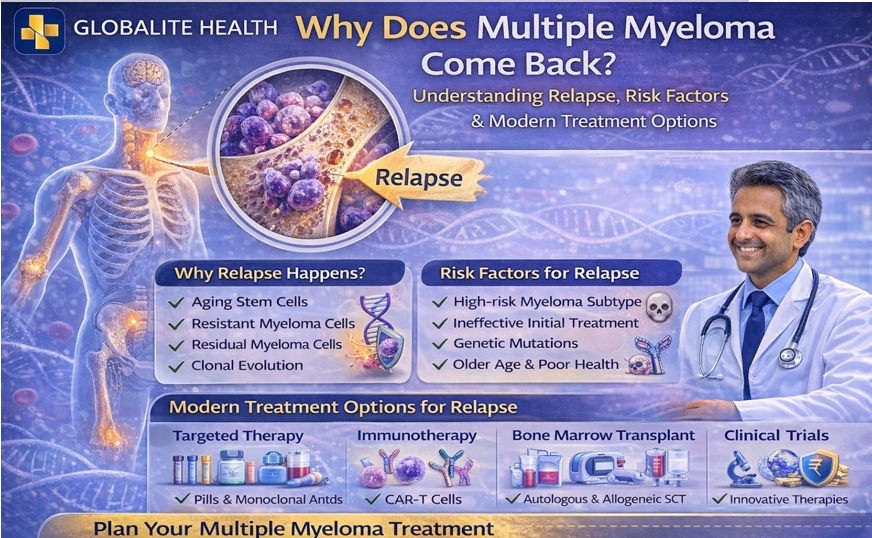
Multiple myeloma is a complex blood cancer that develops in plasma cells—an essential part of the immune system located in the bone marrow. Over the past decade, treatment has improved dramatically with targeted therapy, immunotherapy, stem cell transplant, and advanced combination regimens. Many patients achieve deep remission and long survival.
However, one of the most challenging aspects of multiple myeloma is that it often returns after treatment, a condition known as relapse or recurrence.
Understanding why multiple myeloma comes back, how relapse is detected, and what modern treatments are available can help patients and families feel more prepared and hopeful.
What Is Multiple Myeloma?
Multiple myeloma is a cancer in which abnormal plasma cells grow uncontrollably inside the bone marrow. These cancer cells:
- Crowd out healthy blood-forming cells
- Produce abnormal proteins that damage organs
- Weaken bones and the immune system
Common Symptoms
- Bone pain or fractures
- Fatigue (due to anaemia)
- Repeated infections
- Kidney problems
- High calcium levels
Although modern therapy can control the disease for years, multiple myeloma is generally considered a chronic, relapsing cancer rather than permanently curable.
What Does “Relapse” Mean in Multiple Myeloma?
Relapse means the disease returns or resumes growth after a period of remission.
There are two types:
1️⃣ Biochemical Relapse
- Rising myeloma protein in blood or urine
- No visible symptoms yet
2️⃣ Clinical Relapse
- Symptoms return (bone pain, anaemia, kidney issues)
- Requires urgent treatment
Early detection allows treatment before serious complications develop.
Why Does Multiple Myeloma Come Back After Treatment?
Relapse is not simply “treatment failure.” It happens due to the biological nature of myeloma cells.
- Hidden Residual Cancer Cells (MRD)
Even after successful therapy:
- Tiny numbers of myeloma cells may remain
- Called Minimal Residual Disease (MRD)
- Often undetectable with routine tests
Over time, these cells multiply and cause relapse.
- Genetic Complexity & Clonal Evolution
Myeloma is genetically diverse. Treatment may destroy:
- Some cancer cell clones
- But resistant clones survive
These resistant cells later grow back stronger — a process called clonal evolution.
- Drug Resistance
Cancer cells adapt by:
- Altering surface proteins
- Repairing drug damage
- Activating survival pathways
- Pumping drugs out of cells
A treatment that once worked may lose effectiveness over time.
- Bone Marrow Microenvironment Protection
The bone marrow naturally protects myeloma cells by:
- Providing growth signals
- Shielding cells from chemotherapy
- Supporting resistant cell survival
This makes long-term eradication difficult.
- Immune System Weakness
Both myeloma and its treatments can:
- Reduce immune surveillance
- Lower the body’s ability to eliminate cancer cells
A weakened immune system increases the risk of relapse.
- High-Risk Disease Biology
Certain genetic abnormalities increase relapse risk, including:
- High-risk chromosomal changes
- Rapid cell division
- Poor initial therapy response
Patients with high-risk disease often relapse earlier.
- Treatment Duration & Intensity
Relapse risk may increase if:
- Treatment duration was shortened
- Maintenance therapy was delayed
- Patient could not tolerate full-dose treatment
Long-term management is crucial.
How Soon Can Multiple Myeloma Return?
Relapse timing varies:
- Early relapse: Within 1–2 years (often aggressive)
- Late relapse: After many years
- Long remission: Increasingly possible with modern therapies
Each relapse behaves differently and requires personalised care.
Warning Signs of Myeloma Relapse
Patients should watch for:
- New bone pain
- Fatigue or weakness
- Frequent infections
- Kidney problems
- Rising calcium levels
- Unexplained weight loss
Sometimes relapse is detected only through blood tests, which is why regular follow-up is critical.
Tests Used to Detect Relapse
Doctors may perform:
- Blood protein studies
- Free light chain testing
- Urine protein analysis
- Bone marrow biopsy
- PET-CT or MRI
- MRD testing
Advanced MRD testing can detect 1 cancer cell among 1 million normal cells.
Can Relapsed Multiple Myeloma Be Treated Again?
Yes. Many effective treatments are available even after relapse.
Modern care focuses on:
- Long-term disease control
- Maintaining quality of life
- Sequential therapy lines
Latest Treatment Options for Relapsed Multiple Myeloma (2026)
1️⃣ Targeted Drug Combinations
New combinations target myeloma cells through multiple pathways to achieve a stronger response.
2️⃣ Immunotherapy Breakthroughs
Monoclonal Antibodies
Help the immune system recognise and destroy myeloma cells.
CAR-T Cell Therapy
Patient’s immune cells are modified to attack cancer.
One of the most promising advances in relapsed myeloma.
Bispecific Antibodies
Direct immune cells toward cancer cells for targeted killing.
3️⃣ Second Stem Cell Transplant
Some patients benefit from:
- Repeat autologous transplant
- Extended remission
Suitability depends on age, prior response, and health status.
4️⃣ Maintenance Therapy
Long-term therapy helps:
- Suppress residual cancer cells
- Delay further relapse
- Improve survival
Can Relapse Be Prevented?
While complete prevention isn’t always possible, relapse may be delayed by:
- Achieving MRD-negative remission
- Continuous maintenance therapy
- Regular monitoring
- Early intervention during biochemical relapse
- Infection prevention and healthy lifestyle
Living With Relapsed Multiple Myeloma
Today, many patients live 10 years or longer with modern therapy.
Multiple myeloma is increasingly managed as a chronic condition with:
- Periods of remission
- Occasional relapse
- New treatment options at each stage
Hope continues to improve with medical innovation.
Expert Care Makes a Difference
Relapsed myeloma management requires:
- Accurate risk assessment
- Advanced diagnostics
- Access to modern immunotherapy
- Personalised long-term planning
Care under an experienced haematologist significantly improves outcomes.
About Dr Rahul Bhargava
Dr Rahul Bhargava is a highly experienced haematologist specialising in:
- Blood cancers
- Bone marrow transplantation
- Advanced multiple myeloma treatment
- Immunotherapy & personalised cancer care
His focus is on achieving longer remission, better quality of life, and access to the latest treatment innovations.
Conclusion
Multiple myeloma comes back because of:
- Hidden residual cancer cells
- Genetic mutations and drug resistance
- Bone marrow protection
- Immune weakness
- High-risk disease biology
But relapse does not mean loss of hope.
With modern immunotherapy, CAR-T therapy, targeted drugs, and expert haematology care, many patients live long, meaningful lives even after recurrence.
Early detection, continuous monitoring, and treatment under an experienced specialist can significantly improve long-term outcomes.
Frequently Asked Questions (Corrected for Multiple Myeloma)
Is multiple myeloma curable?
Currently considered treatable but not permanently curable. Long-term remission is possible.
How common is relapse in myeloma?
Relapse is common due to the disease’s biological nature, but timing varies widely.
What is MRD in myeloma?
Minimal Residual Disease refers to the presence of tiny cancer cells that persist after treatment.
Can immunotherapy cure relapsed myeloma?
Immunotherapy can produce deep remission, but long-term monitoring remains necessary.
How long can someone live after relapse?
With modern therapy, many patients live several years or more after relapse.