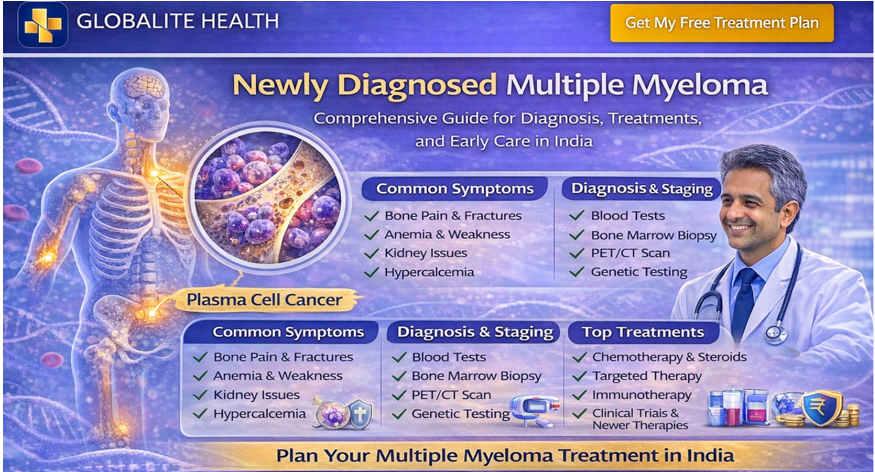
Being diagnosed with multiple myeloma can be frightening and confusing. Patients often search online for answers about survival, treatment options, stem cell transplant, and long-term outcomes. The good news is that modern medicine has transformed multiple myeloma into a highly treatable and manageable blood cancer.
In this comprehensive SEO-optimised guide, we explain everything newly diagnosed patients need to know — from staging and genetic testing to first-line treatment, side effect management, and long-term care.
What Is Multiple Myeloma?
Multiple myeloma is a type of blood cancer that develops in plasma cells inside the bone marrow. Plasma cells normally help fight infections by producing antibodies. In myeloma:
- Cancerous plasma cells multiply uncontrollably
- Healthy blood cell production decreases
- Abnormal proteins damage the kidneys
- Bones become weak
Common Symptoms of Multiple Myeloma
- Persistent bone pain (especially spine or ribs)
- Fatigue due to anaemia
- Frequent infections
- Kidney problems
- High calcium levels
- Unexplained weight loss
Early diagnosis and expert-led treatment significantly improve outcomes.
Is Multiple Myeloma Curable?
One of the most searched questions is: “Is multiple myeloma curable?”
Currently, multiple myeloma is not considered permanently curable. However, it is:
- Highly treatable
- Often controllable for many years
- Managed like a chronic condition
With modern therapies:
- Deep remission is possible
- Long disease-free intervals can be achieved
- Relapses can be effectively treated
- Quality of life can remain excellent
Many patients today live 10 years or longer with appropriate treatment and monitoring.
Understanding Staging in Multiple Myeloma
Staging helps determine disease severity and guides treatment planning.
International Staging System (ISS)
Based on:
- Beta-2 microglobulin
- Albumin levels
Stages include:
- Stage I – Early-stage disease
- Stage II – Intermediate stage
- Stage III – Advanced stage
Revised ISS (R-ISS)
Includes:
- Genetic risk factors
- LDH levels
High-risk disease does not mean poor survival, but it requires aggressive and carefully structured treatment.
Importance of Genetic Testing in Multiple Myeloma
Not all myeloma behaves the same way. Bone marrow genetic testing identifies:
- High-risk chromosomal abnormalities
- Likelihood of early relapse
- Expected response to therapy
This allows personalised treatment planning, ensuring patients receive:
- Stronger therapy when needed
- Avoidance of overtreatment in low-risk cases
- Optimised drug combinations
Precision medicine is now the foundation of modern myeloma care.
First-Line Treatment for Newly Diagnosed Multiple Myeloma
Treatment depends on age, overall health, stage, and genetic risk.
1️⃣ Targeted Therapy
Targeted drugs attack specific pathways that help myeloma cells survive.
Benefits:
- More precise treatment
- Better tolerability
- Improved response rates
Targeted therapy forms the backbone of first-line treatment.
2️⃣ Immunotherapy
Immunotherapy strengthens the body’s immune system to fight cancer cells.
Advantages:
- Long-lasting disease control
- Works synergistically with other drugs
- Reduced reliance on traditional chemotherapy
Immunotherapy has revolutionised myeloma outcomes worldwide.
3️⃣ Role of Steroids
Steroids are essential in treatment regimens because they:
- Rapidly reduce tumour burden
- Relieve bone pain
- Enhance the effectiveness of other medications
They are used carefully to minimise side effects.
4️⃣ Stem Cell Transplant (Autologous)
For eligible patients, an autologous stem cell transplant may:
- Deepen remission
- Extend survival
- Delay relapse
Not every patient requires a transplant. Suitability is carefully evaluated.
Managing Side Effects During Treatment
Modern multiple myeloma treatment is safer than before, but side effects can occur.
Common Side Effects
- Fatigue
- Numbness or tingling (neuropathy)
- Increased infection risk
- Digestive issues
How Side Effects Are Controlled
- Dose adjustments
- Preventive medications
- Close monitoring
- Nutritional support
Most side effects are manageable and reversible when addressed early.
Nutrition During Multiple Myeloma Treatment
Proper nutrition strengthens immunity and supports recovery.
Recommended Diet
- High-protein foods
- Fresh fruits and vegetables
- Adequate hydration
- Reduced processed foods
Patients with kidney involvement require specialised dietary guidance.
Importance of Physical Activity
Contrary to popular belief, complete bed rest is rarely recommended.
Benefits of guided exercise:
- Improved strength
- Reduced bone pain
- Better mood
- Faster recovery
Physiotherapy is particularly helpful for bone disease.
Bone Health in Multiple Myeloma
Myeloma weakens bones by increasing bone breakdown.
Bone Protection Strategies
- Bone-strengthening medications
- Vitamin D (when appropriate)
- Avoiding high-impact activities
- Early fracture management
Protecting bones improves long-term independence and quality of life.
Infection Prevention
Because myeloma affects immunity, infection control is critical.
Preventive measures:
- Vaccinations (as advised)
- Prompt reporting of fever
- Good hygiene
- Avoiding crowded places during low immunity
Early detection prevents complications.
Kidney Protection
Kidney damage is common but often reversible with early care.
Key strategies:
- Adequate hydration
- Avoiding unnecessary painkillers
- Monitoring kidney function regularly
- Controlling myeloma protein levels
Expert supervision is essential.
Psychological Support & Mental Health
A cancer diagnosis affects emotional well-being.
Common challenges:
- Anxiety
- Depression
- Fear of relapse
- Sleep disturbances
Counselling, family support, and patient education significantly improve resilience.
Long-Term Monitoring After Initial Treatment
Even during remission, regular follow-up is essential.
Monitoring includes:
- Blood tests
- Imaging when needed
- Side effect evaluation
- Lifestyle guidance
Early detection of relapse leads to better outcomes.
What If Multiple Myeloma Relapses?
Relapse does not mean treatment failure.
Modern medicine offers:
- Advanced drug combinations
- Immunotherapy options
- CAR-T therapy
- Second transplant in selected patients
Each relapse is treated strategically to achieve remission again.
Why Choose Expert Myeloma Care?
Multiple myeloma is complex and requires:
- Advanced diagnostics
- Personalised treatment planning
- Access to modern therapies
- Long-term management strategy
Under the care of Dr Rahul Bhargava, patients receive:
- Evidence-based treatment
- Individualised therapy selection
- Clear communication
- Focus on both survival and quality of life
Final Message to Newly Diagnosed Patients
A multiple myeloma diagnosis is serious — but it is not hopeless.
With:
- Early intervention
- Expert haematology care
- Modern targeted therapy and immunotherapy
- Structured follow-up
Patients can:
- Live longer
- Maintain independence
- Preserve quality of life
- Stay hopeful
Medical science continues to evolve rapidly, and outcomes improve every year.
Frequently Asked Questions
Is multiple myeloma hereditary?
Most cases are not inherited, though family history may slightly increase risk.
Can multiple myeloma be treated without chemotherapy?
Many modern regimens rely heavily on targeted therapy and immunotherapy, thereby reducing exposure to traditional chemotherapy.
How long does treatment last?
Initial treatment usually lasts several months, followed by maintenance therapy that may continue long-term.
Can patients continue working during treatment?
Many patients continue part-time or adjusted work schedules depending on energy levels and treatment intensity.