

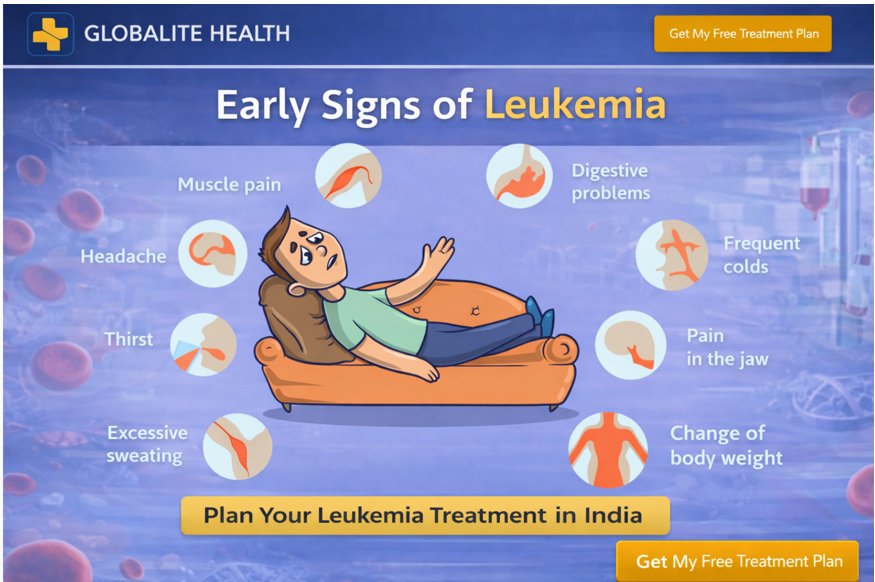
Leukaemia is a serious type of blood cancer that affects the bone marrow and white blood cells. In many cases, the early signs of leukaemia are subtle and may resemble common illnesses such as the flu, viral infections, or anaemia. Because of this, the disease is sometimes diagnosed late.
Recognising the early symptoms of leukaemia can significantly improve treatment outcomes. Early detection improves survival rates and increases the likelihood of complete remission, especially in acute leukaemia.
If you or a loved one notices persistent, unexplained symptoms, it is important to consult a haematologist for proper evaluation.
What is Leukaemia?
Leukaemia is a cancer of the blood and bone marrow—the soft tissue inside bones where blood cells are produced.
In a healthy body, bone marrow produces:
- Red blood cells (carry oxygen)
- White blood cells (fight infection)
- Platelets (help blood clot)
In leukaemia, the body produces large numbers of abnormal white blood cells. These cancerous cells:
- Do not function properly
- Multiply rapidly
- Crowd out healthy blood cells
This leads to anaemia, infections, and bleeding complications.
Leukaemia can be:
- Acute (fast-growing) – requires urgent treatment
- Chronic (slow-growing) – may develop gradually
6 Early Warning Signs of Leukaemia
1️⃣ Persistent Fatigue and Weakness
One of the earliest and most common symptoms of leukaemia is extreme fatigue that does not improve with rest.
Why does it happen?
Leukaemia reduces the production of healthy red blood cells, leading to anaemia. Without enough oxygen circulating in the body, patients feel:
- Constant tiredness
- Weakness
- Low energy
- Shortness of breath during simple activities
If fatigue persists for weeks without improvement, medical evaluation is necessary.
2️⃣ Frequent Infections and Recurrent Fever
White blood cells are responsible for fighting infections. In leukaemia, abnormal white blood cells cannot protect the body effectively.
Common signs:
- Frequent colds
- Persistent sore throat
- Recurrent infections
- Fever without a clear cause
- Night sweats
If infections are unusually frequent or difficult to treat, it may indicate an underlying blood disorder.
3️⃣ Easy Bruising and Unexplained Bleeding
Leukaemia affects platelet production, which helps blood clot.
Warning signs include:
- Frequent nosebleeds
- Bleeding gums
- Heavy menstrual bleeding
- Bruises without injury
- Tiny red spots on skin (petechiae)
These symptoms occur due to low platelet counts (thrombocytopenia).
4️⃣ Swollen Lymph Nodes or Enlarged Spleen
Leukaemia cells can accumulate in lymph nodes and organs.
You may notice:
- Painless swelling in the neck
- Swelling in the armpits or groin
- Feeling of fullness in the abdomen
- Enlarged spleen
Swollen lymph nodes without infection should always be evaluated.
5️⃣ Bone or Joint Pain
Because leukaemia begins in the bone marrow, patients may experience:
- Deep bone pain
- Joint discomfort
- Leg or arm pain
- Pain worsening at night
Children with leukaemia may complain of leg pain or refuse to walk.
6️⃣ Unexplained Weight Loss and Loss of Appetite
Sudden weight loss without dieting or lifestyle changes can be a red flag.
Other related signs:
- Feeling full quickly
- Reduced appetite
- General weakness
Unexplained weight loss should never be ignored.
Additional Early Symptoms of Leukaemia
Other possible signs include:
- Pale skin (due to anaemia)
- Shortness of breath
- Persistent headaches
- Excessive sweating at night
- Dizziness
- Gum swelling (especially in AML)
Symptoms may vary depending on whether leukaemia is acute or chronic.
When Should You Seek Medical Help?
You should consult a doctor if:
- Symptoms persist for more than 2–3 weeks
- Fatigue is severe and unexplained
- Bruising or bleeding occurs without injury
- Recurrent infections do not improve
- Lymph nodes remain swollen
Early diagnosis through blood tests, such as a Complete Blood Count (CBC), can detect abnormalities quickly.
How Is Leukaemia Diagnosed?
If leukaemia is suspected, doctors may perform:
- Complete Blood Count (CBC)
- Peripheral blood smear
- Bone marrow biopsy
- Flow cytometry
- Genetic testing (for mutations like BCR-ABL)
Early testing significantly improves treatment outcomes.
Why Early Detection Matters
When leukaemia is diagnosed early:
- Treatment can start immediately
- Cure rates are higher
- Complications are reduced
- Long-term survival improves
For example:
- Childhood Acute Lymphoblastic Leukaemia (ALL) has cure rates above 85–90%
- Chronic Myeloid Leukaemia (CML) is manageable with targeted therapy
Timely medical consultation saves lives.
Expert Leukaemia Care in India
For patients seeking advanced leukaemia treatment, one of India’s leading haematologists is:
Dr. Rahul Bhargava
With over 25 years of experience in haematology and bone marrow transplantation, he has treated complex leukaemia cases using advanced therapies including chemotherapy, targeted therapy, immunotherapy, and stem cell transplant.
India offers:
- Advanced leukaemia diagnosis
- Affordable treatment options
- Bone marrow transplant programs
- CAR T-cell therapy availability
- International patient support
Frequently Asked Questions (FAQs)
What are the earliest warning signs of leukaemia?
Persistent fatigue, frequent infections, unexplained bruising, swollen lymph nodes, bone pain, and weight loss are common early signs.
When should I worry about symptoms that look like leukaemia?
If symptoms last more than a few weeks or worsen over time, especially if multiple symptoms occur together, consult a doctor immediately.
How can leukaemia be detected early?
A simple blood test (CBC) can detect abnormal levels of blood cells. Further tests confirm the diagnosis.
Are leukaemia symptoms different in adults and children?
Yes. Children may present with bone pain and fatigue, while adults may experience weight loss, infections, or swollen lymph nodes.
Can early leukaemia be cured if diagnosed quickly?
Yes. Many types of leukaemia are highly treatable and even curable when diagnosed early and treated appropriately.