

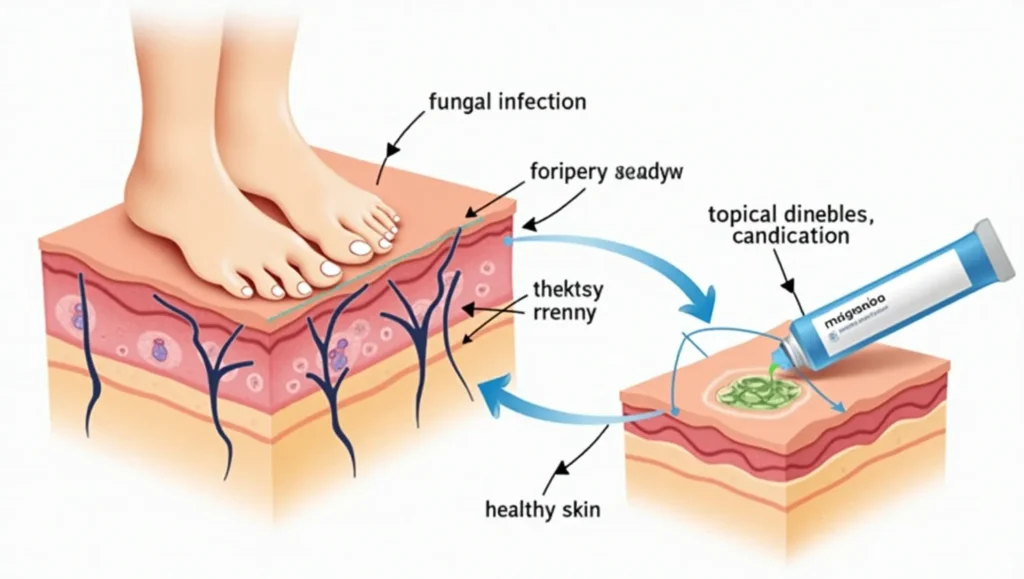
Fungal infections can be stubborn and surprisingly common.
Whether it’s athlete’s foot, ringworm, or yeast-related irritation, these infections thrive in warm, moist areas, which means almost anyone can get one.
The good news? You can actually kill fungal infections completely when treated early with the right approach.
This guide breaks down what works, what doesn’t, and how international patients can access affordable, top-tier antifungal care through medical tourism.
What Kills a Fungal Infection on Skin?
Antifungal creams, oral medications, and good hygiene kill fungal infections by destroying fungal cells and preventing regrowth.
Key Takeaways
- Antifungal creams, oral medications, and hygiene habits are the main ways to kill fungal infections.
- Home remedies can help mild cases, but should not replace medical treatment.
- Recurring infections often mean an underlying immune or hygiene issue.
- Early treatment prevents spreading and scarring.
- Medical tourism in the UAE and India offers affordable, high-quality antifungal care.
Understanding How Fungal Infections Work
Fungal infections are caused by microscopic organisms that live on dead tissue skin, hair, or nails. When the skin’s natural barrier is damaged, these fungi multiply, creating red, itchy patches or peeling skin.
The most common culprits are dermatophytes, Candida, and Malassezia. They thrive in humid conditions, tight clothing, and poor hygiene environments.
To kill the infection, you must target the fungus itself, not just the symptoms. That’s where antifungal treatments, both topical and oral, come in.
Understanding what’s happening under the surface helps you choose the right treatment and avoid reinfection later.
Topical Treatments: First Line of Defense
For mild skin infections, topical antifungal creams and ointments are your go-to. Over-the-counter options like clotrimazole, terbinafine, or ketoconazole kill fungi directly by damaging their cell membranes.
Apply a thin layer twice daily, even after symptoms fade, for at least two weeks. Most people stop too early; that’s when fungi regroup and return.
If the infection covers a large area, doctors may prescribe stronger topical combinations that include mild steroids to reduce inflammation. But never self-medicate long-term, especially with steroid creams, as they can worsen fungal growth over time.
Action Tip: Wash affected areas with an antifungal soap before applying any cream. Dry thoroughly, as fungi love moisture.
Oral Antifungal Medications: When Creams Aren’t Enough
If the infection has spread or keeps coming back, oral antifungals step in. Drugs like fluconazole, itraconazole, and terbinafine tablets reach deeper layers of the skin through your bloodstream.
They’re highly effective but should always be prescribed by a dermatologist, as long-term use can affect the liver.
Typically, a 2–6 week course clears most infections, depending on severity.
In advanced or chronic cases, patients traveling abroad for medical tourism often receive lab cultures and personalized dosage plans for faster results. These specialized treatments in India and the UAE are affordable yet medically advanced.
Tip: Combine oral and topical therapy only under medical supervision for complete fungal elimination.
Natural Remedies That Actually Help
While antifungal medications remain the gold standard, some home remedies can support healing. Tea tree oil, apple cider vinegar, and diluted hydrogen peroxide have mild antifungal properties when applied properly.
For instance, a few drops of tea tree oil mixed with coconut oil can soothe and dry out infection sites. However, these remedies only help mild cases or early symptoms.
If itching, redness, or flaking persists beyond a week, skip the DIY route and get a doctor’s opinion. Untreated fungal infections can spread to others or become resistant to medication.
Important: Never mix natural and medical creams without advice, as interactions can reduce effectiveness.
Hygiene and Lifestyle Habits That Prevent Fungal Growth
Even the best antifungal treatment won’t work if fungi find their way back.
Simple hygiene tweaks can make a huge difference.
- Keep skin dry, especially between toes and under folds.
- Change socks and underwear daily.
- Avoid sharing towels, razors, or footwear.
- Disinfect shoes regularly.
- Opt for loose, breathable fabrics in humid climates.
After workouts or swimming, shower immediately and dry off completely. For frequent travelers or those visiting tropical regions, carrying an antifungal powder can help prevent flare-ups.
Action Step: Make hygiene part of your daily skin care routine — it’s the easiest way to keep fungal infections away for good.
Why Medical Tourism Helps You Treat Fungal Infections Better
Medical tourism has made high-quality dermatological care more accessible than ever. Countries like India and the UAE offer affordable, specialist-led fungal infection treatments with advanced diagnostic tools.
Patients from Africa, Europe, and the GCC often travel for faster appointments, personalized prescriptions, and lower costs compared to their home countries. Many clinics provide combination treatments, oral, topical, and laser-based, that target deep-rooted fungal infections effectively.
At Globalite Health, we help patients connect with internationally accredited dermatologists who use evidence-based treatments for all skin types. You get complete care: diagnosis, medication, and follow-up plans, all under one roof.
Book your medical tourism package with Globalite Health today and experience expert fungal infection treatment abroad.
Frequently Asked Questions
1. What kills fungus on skin fast?
Topical antifungal creams like clotrimazole or terbinafine can start killing fungus within days of consistent use.
2. Can a fungal infection go away on its own?
Rarely. Most need medical treatment to prevent spreading and scarring.
3. What is the strongest antifungal treatment?
Oral medications like itraconazole and terbinafine are the most potent but require medical supervision.
4. How long does it take for a fungal infection to heal?
Typically, 2–4 weeks for mild cases, longer for nail or scalp infections.
5. Can I use natural remedies instead of medicine?
Only for mild infections. Persistent or spreading rashes need prescription antifungals.
6. Is medical tourism safe for skin treatments?
Yes, if done through accredited providers like Globalite Health with certified dermatologists.
7. Can fungal infections return after treatment?
Yes, without proper hygiene or full treatment completion, reinfection is common.
Conclusion: Stop the Spread, Heal the Skin
Fungal infections may be common, but they’re entirely treatable with the right approach. Early diagnosis, consistent treatment, and proper hygiene can clear your skin and prevent recurrences.
If your infection keeps coming back or you’re looking for affordable global treatment options, Globalite Health connects you with leading dermatologists in the UAE and India.Take the first step toward clear, healthy skin — Book your medical tourism package now.